
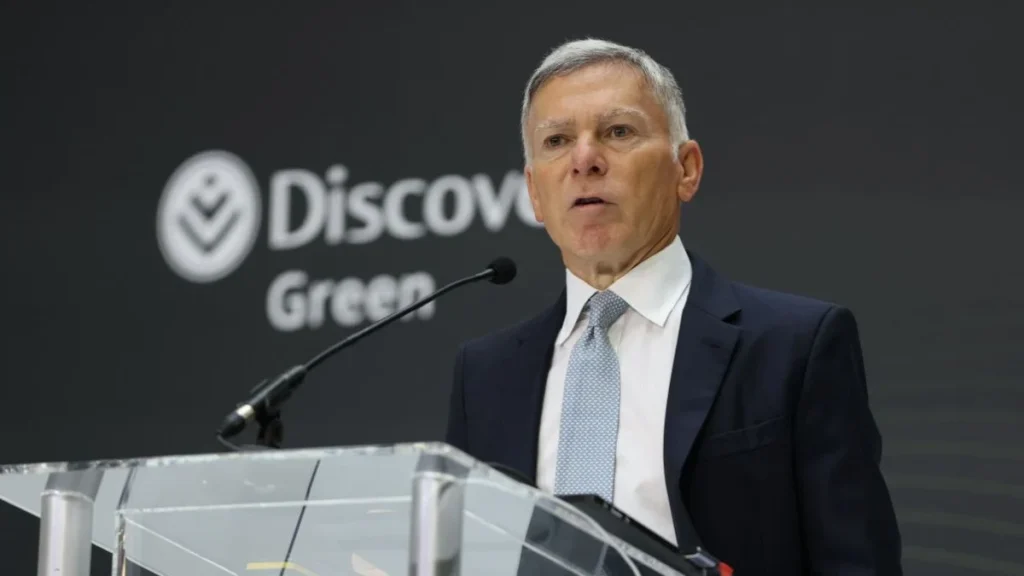

In a move that has sparked renewed debate about investor confidence and corporate leadership during times of uncertainty, Discovery Limited CEO Adrian Gore has offloaded R50.3 million worth of shares in the Johannesburg-listed financial services giant.
While there wasn’t a lot of information provided to make sense of the sale, it comes at a pivotal moment for South Africa’s economy — as the South African rand continues to gain strength,1 market players re-evaluate their long-term risk exposures.
Market analysts have quelled waters, though, suggesting that the sale of the shares is not an indication of a lack of confidence in the company, but rather for risk management purposes.
The transaction is part of what Discovery describes as a “planned and pre-arranged” share reduction and extended hedge strategy, designed to manage personal financial exposure without impacting operational leadership or strategic direction.
Context of Discovery CEO’s Shares and Positions
According to JSE disclosures, Adrian Gore sold 930,000 Discovery ordinary shares at market prices, aggregating just over R50 million. Discovery emphasised that the sale was conducted in accordance with Rule 13 of the JSE Listings Requirements, which governs director dealings and allows for pre-set trading plans to avoid allegations of insider trading.
In a statement to stakeholders, Discovery clarified that Gore remains deeply invested in the company, retaining a significant shareholding and continuing to lead its innovation-driven growth strategy.
“This is not a reflection of diminished confidence in the business,” the company noted. “Rather, it is a personal financial planning decision aligned with risk management best practices.”
Still, the optics are challenging.
Strategic Hedges and Market Sentiment
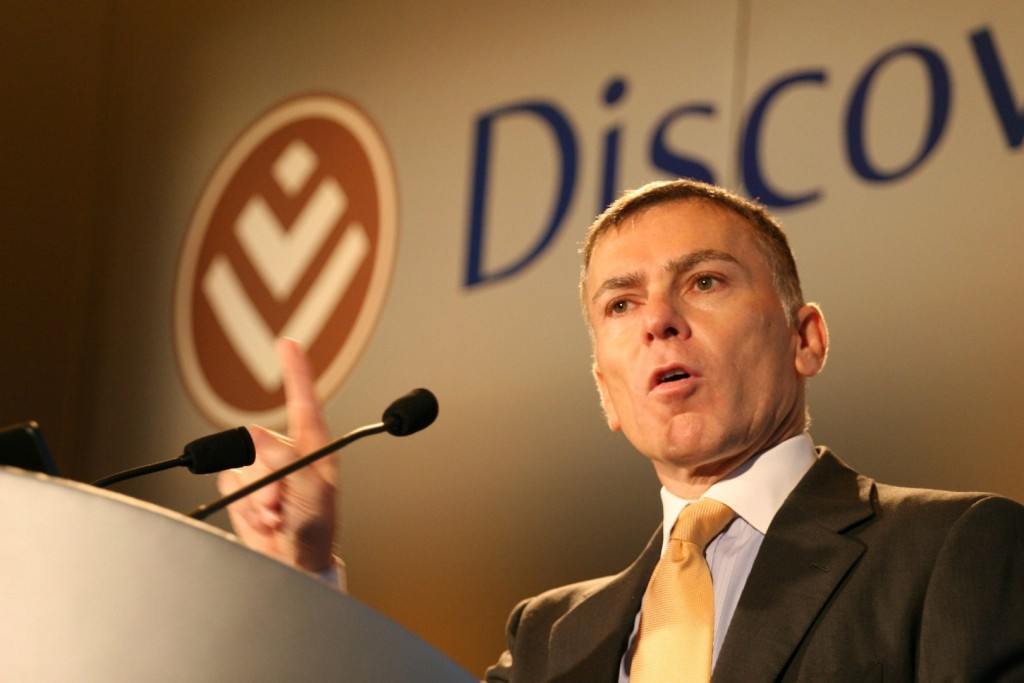
The Bulletin reported that Gore’s move forms part of a broader personal hedge strategy — including derivative instruments and offshore asset allocation — designed to mitigate concentration risk in a single market and company. Analysts say such moves are becoming common among C-suite executives in emerging markets, particularly in regions where currency volatility and political risk remain elevated.
Still, retail investors, many of whom hold Discovery shares through retirement funds or direct brokerage accounts, are watching closely. Part of the uncertainty is rooted in Discovery’s stock underperforming in the JSE’s Top 40 index over the past 18 months.
Gore remains a significant shareholder, holding 6.71% of Discovery as of the end of June. That amount of shares are valued at more than R10 billion.
Future Outlook for 2026
Ironically, Discovery remains one of South Africa’s most technologically advanced financial institutions, leveraging behavioural economics, AI-driven wellness incentives, and digital underwriting to maintain competitive moats. Its Vitality ecosystem continues to expand into new markets, including the U.S. and UK, and contributes to over 40% of the group’s earnings.2
The company has benefited from several positive developments:
- Growing international revenue streams through Vitality Global partnerships
- Improved claims ratios in its health insurance business
- Continued digital transformation is driving operational efficiencies
- Strong new business growth across multiple segments
Investor Takeaway: Leadership in Transition
Gore, a co-founder and the public face of Discovery for over three decades, has not signalled plans to step down. The company is in the midst of grooming a next-generation leadership team, with COO Rebecca Matos de Gusmão emerging as a likely successor in the coming years. Governance experts suggest that gradual executive transition — paired with measured equity reallocation — can strengthen long-term stability, rather than weaken it.
Still, the R50 million sale serves as a timely reminder: even the boldest visionaries adapt when the macro backdrop darkens.
As South Africa grapples with a crisis that extends far beyond electricity supply, the actions of leaders like Gore offer more than financial headlines — they provide insight into confidence levels at the highest levels of corporate South Africa.
For investors, the lesson is clear: watch the fundamentals, not just the headlines. Discovery may be navigating choppy waters, but its digital-first model and disciplined capital management keep it anchored — for now.
Yet, as Gore himself has warned, no amount of innovation can fully insulate a company from national decline. The real test isn’t just whether Discovery survives, but whether South Africa creates the conditions for its champions to thrive.
Sources