
FirstRand has etched its name in South African financial history by becoming the first local bank to surpass the R500 billion market capitalisation threshold. This is a great way to usher in the new year, solidifying its position as the nation’s most valuable financial institution.
In November last year, TimesLive had reported that Capitec and FirstRand were in a fierce race to notch the coveted accolade.1 It is worth noting that the competitive landscape among South Africa’s Big Five banks continues to intensify, with market valuations reflecting investor confidence in diverse growth strategies.
FirstRand’s Market Leadership: Key Figures
The banking conglomerate, which operates household names including FNB (First National Bank), WesBank, and Rand Merchant Bank (RMB), commenced 2026 with a market valuation of approximately R510 billion. This achievement places FirstRand ahead of its closest competitors:
| Bank | Market Capitalisation (Jan 2026) |
|---|---|
| FirstRand | R510 billion |
| Capitec Bank | R482 billion |
| Standard Bank | R478 billion |
| Absa Group | R214 billion |
| Nedbank | R127 billion |
Source: JSE market data, January 2026
Disclaimer Market capitalisation figures fluctuate based on share price movements. Financial metrics are sourced from the most recent publicly available annual reports and may not reflect current performance.
Show more
This article is for informational purposes only and does not constitute investment advice.
Strategic Acquisitions Driving FirstRand’s Growth
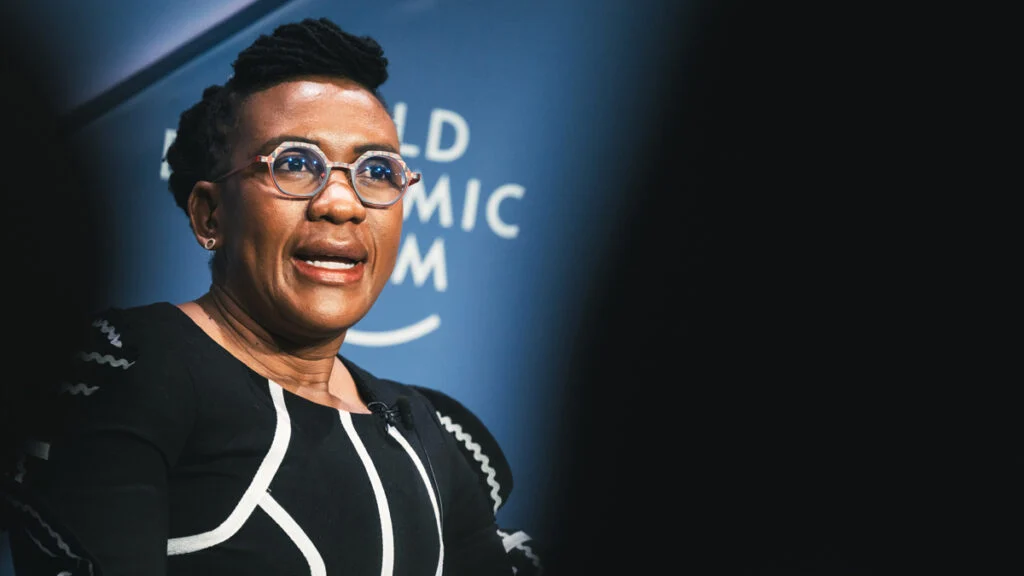
Under the leadership of Mary Vilakazi, notably the only woman at the helm of a major bank in Africa’s most industrialised economy, FirstRand has pursued an aggressive expansion strategy focused on both traditional banking capabilities and emerging financial technologies.
Key Strategic Moves:
1. HSBC South Africa Acquisition
FirstRand acquired HSBC’s South African operations to strengthen its corporate and investment banking division, enhancing its competitive positioning against rivals in the lucrative wholesale banking segment.2
2. Optasia Fintech Investment
The group invested nearly R5 billion for a 20% stake in Optasia, an AI-powered fintech multinational specialising in credit scoring and digital lending solutions.3 This strategic investment signals FirstRand’s commitment to leveraging artificial intelligence in financial services.
According to credit ratings agency Moody’s, this transaction is considered “credit positive” for FirstRand, as it diversifies revenue streams and positions the bank at the forefront of digital financial innovation.3
Source: Moody’s Investors Service credit analysis
The Fintech Arms Race: South African Banks Investing Heavily in Digital Innovation
FirstRand’s fintech investments reflect a broader industry trend, as South African banking institutions scramble to acquire digital capabilities and fintech expertise.
Recent Fintech Acquisitions by SA Banks:
- Nedbank: Acquired iKhokha, a leading South African point-of-sale payment solutions provider, for R1.65 billion.4
- Capitec Bank: Announced the 100% acquisition of Walletdoc, a digital invoicing and payment platform, to enhance “affordability and accessibility to digital payments”.5
These acquisitions underscore the strategic imperative facing traditional banks: adapt to digital transformation or risk losing market share to agile fintech disruptors and neobanks.
Financial Performance Comparison: How SA’s Top Banks Stack Up
Understanding market capitalisation requires examining the underlying financial fundamentals driving investor sentiment. Here’s how South Africa’s major banks performed on key metrics:
FirstRand (FY ended June 2025)
- Normalised Earnings: R41.8 billion (up 10%)
- Return on Equity (ROE): 20.2%
- Headline Earnings Per Share (HEPS): 748.8 cents (up 10%).
Source: FirstRand Limited Annual Integrated Report 2025
Standard Bank (FY ended June 2025)
- Headline Earnings: R24 billion
- Return on Equity (ROE): 19.1% (best since 2008)
- Cost-to-Income Ratio: 49.4%
- Africa Regions Contribution: ~R18 billion in headline earnings; revenue approaching R60 billion
Standard Bank’s pan-African strategy continues to deliver substantial returns, with operations across the continent serving as a significant growth engine.
Source: Standard Bank Group Annual Financial Statements 2025
Capitec Bank (FY ended February 2025)
- Headline Earnings: R13.7 billion (+30% year-on-year)
- Return on Equity (ROE): 29%
- Cost-to-Income Ratio: 41%
- Active Clients: 25 million+
Capitec’s exceptional ROE and industry-leading cost efficiency demonstrate the power of its focused retail banking model.
Source: Capitec Bank Holdings Limited Annual Report 2025
Absa Group (FY ended December 2025)
- Headline Earnings: R11.9 billion
- Return on Equity (ROE): 14.8%
- Cost-to-Income Ratio: 53.2%
Source: Absa Group Limited Integrated Report 2025
Nedbank (FY ended June 2025)
- Headline Earnings: R8.4 billion (up 6%).
- Return on Equity (ROE): Improved to 15.2%.
- Cost-to-Income Ratio: 57%
Source: Nedbank Group Limited Annual Results 2025
Capitec: The Disruptor That Defied Expectations
Perhaps no bank better exemplifies the transformation of South African banking than Capitec Bank. The Stellenbosch-headquartered lender has achieved what once seemed impossible: a combined market valuation exceeding Absa, Nedbank, and Investec’s South African operations.
Capitec’s Remarkable Journey:
- Share price appreciation: Over 150% growth in the past five years
- Customer base: An unmatched 25 million clients
- Strategic focus: Disciplined concentration on retail banking segments where competitive advantages exist
The bank’s next frontier involves disrupting the business banking sector, with ambitions to bring informal businesses into the formal financial ecosystem—a potentially massive addressable market in South Africa’s economy.
Absa’s Renaissance Under Kenny Fihla
Absa Group has emerged as the standout performer over recent months, with its share price surging 36% in six months—the strongest performance among major SA banks during this period.3
New CEO Kenny Fihla has reinvigorated the organisation with:
- A clear growth blueprint focused on execution excellence
- Plans for geographic revenue diversification across African markets
- A commitment to capturing previously untapped opportunities (“not leaving money on the table”)
While Absa currently trails peers on efficiency metrics and returns, investor enthusiasm suggests confidence in Fihla’s turnaround strategy and Africa expansion plans.
Nedbank: Refocusing After West African Exit
Nedbank enters 2026 seeking to reverse an underwhelming market performance. The bank has undergone strategic repositioning following its exit from West African operations — specifically divesting its minority stake in Ecobank — to concentrate on:
- South African market growth
- Southern African Development Community (SADC) expansion
This regional focus represents a more concentrated strategy, potentially allowing for improved operational efficiency and returns as the bank leverages its strengths in familiar markets.
What This Means for Investors: Key Takeaways
South African Banking Sector Investment Considerations:
- Diversified vs. Focused Models: FirstRand and Standard Bank offer diversified exposure across retail, commercial, and investment banking, while Capitec provides pure-play retail banking exposure with superior efficiency metrics.
- Africa Growth Opportunity: Standard Bank and Absa provide meaningful exposure to African markets beyond South Africa — a key differentiator for investors seeking continental growth exposure.
- Digital Transformation: All major banks are investing heavily in fintech capabilities, with acquisition activity likely to continue as institutions seek technological competitive advantages.
- Valuation Considerations: Higher market caps don’t always indicate the best value — Capitec commands premium valuations due to exceptional efficiency and growth, while Absa may offer value for investors believing in turnaround potential.
Conclusion: A New Era for South African Banking
FirstRand’s breakthrough above R500 billion in market capitalisation represents more than a numerical milestone, it signals the maturation and global competitiveness of South Africa’s banking sector. With strong fundamentals, strategic fintech investments, and diversified business models, South African banks continue attracting domestic and international investor interest.
As competition intensifies among these financial giants, consumers and businesses stand to benefit from continued innovation, improved digital services, and expanded financial inclusion efforts. The race to the next milestone has already begun.
Sources
- TimesLive, 2025
- HSBC South Africa, 2024
- Business Day, 2025
- SME South Africa, 2025
- Capitec Bank, 2025